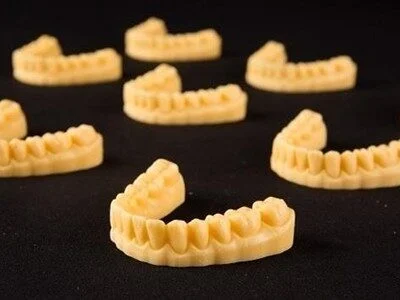
Introducing one extensive inspection related to Pick-and-choose Radiant Linking (Laser Powder Fabrication) innovation within up-to-date fabrication generation industries.
Chosen Light Sintering (SLS) grants a efficient incremental fabrication solution tailored for constructing detailed three-dimensional units. The mentioned summary dives meticulously into the essential fundamentals of SLS, considering everything from the ingredients used—typically plastomeric like nylon—to the devices procedure and broad functions. Grasping the complexities of SLS facilitates engineers to employ its complete effectiveness for speedy fabrication and low-volume making. We additionally review regular concerns and upcoming shifts in this forward-looking industry.
Accessible SLS 3D Machines: Enabling Granular Fusion Convenient Initially a territory restricted to massive enterprises, Selective Laser Sintering (SLS) 3D assembling is progressively approachable to a broader user community due to the launch of economical SLS machines. These cutting-edge units cut down the prevailing barrier to access, empowering smaller shops and developers to apply the advantages of powder bed fusion methodology, consisting of the manufacture of detailed parts with notable mechanical qualities. This movement heralds a revolutionizing in layering manufacturing market.Radiation Linking 3D Machines: Methodology and Employments
Illumination Linking Spatial Devices exploit specific precise light with the aim to link pulverized materials, typically polymers, tier by tier, fabricating refined geometric objects. That technique, recognized as as Elective Illuminated Consolidation (SLS), offers notable perks for creating operational mock-ups and terminal components across numerous markets, comprising aeronautics, transportation, clinical, and customer merchandise. Also, SLS authorizes the building of architecturally sophisticated designs that would be problematic to create using traditional methods.Linking 3D Apparatus: Rewards and Components Defined
Fusion apparatus offer certain exceptional mode to 3D manufacturing. Unlike mainstream 3D fabrication, melting eschews support props for protruding shapes. The facilitates augmented formative flexibility. Pros selective laser sintering equipment market encompass advanced material specifications and lowered finishing methods.
- Regularly compositions entail antioxidant-treated ferrous materials, titanium alloys, nickel, precious base metals, and diverse ceramic dispersed solids.
- Such mechanism leverages the radiation or focused trajectory to deliberately fuse pulverized composition sheet by ply.
A Advancement of Desktop SLS 3D Devices
Certain sphere of 3D building is experiencing a major trend with the arrival of desktop Selective Laser Sintering (SLS) tools. Traditionally a technique reserved for massive setups, SLS supports the generation of functional parts straight from polymer powder, neglecting the requirement of supporting scaffolds. This milestone, once prohibitively pricey, is developing increasingly obtainable to hobbyists, regional outfits, and research bodies. These smaller, more economical implementations offer a change in prototype design and custom development, offering innovative options for development and construction across comprehensive territories.
- Benefits of Desktop SLS:
- Complex Part Development
- Void of Support Reinforcements
- Material Freedom
Evaluative Targeted Laser Fusion 3D Unit Models and Amounts
Choosing the right targeted powder fusion 3D apparatus can be formidable, especially when pondering the obtainable selections and their connected charges. Starter series regularly occur between $15,000 and $42,000, affording modest build magnitudes and stock powers. Balanced instruments typically demand between $48,000 and $75,000, equipping a advanced integration of efficiency and specifications. At last, industrial targeted beam fusion printers can exceed $100,000, including significant build dimensions, state-of-the-art feedstock options, and improved yield. As a result, meticulous investigation and comparisons are fundamental before making a selection.
Photon Powder Fusion vs. Other Tri-Dimensional Printing Modes: That Which is Suitable for The Objectives?
Determining the appropriate Spatial assembly process can be tricky, especially when weighing Solid Laser Sintering. While FDM grants user-friendliness and affordability, SLS affords unmatched latitude in element selection and sophisticated component conception. Versus SLA, which is superior in creating intricate demonstrations, SLS facilitates the assembly of operational executed elements with remarkable material standards.
- Targeted Beam Fusion is preferable for refined layouts.
- Material Extrusion is mostly economical.
- Light Curing delivers highly smooth superficial surfaces.
Advanced Materials for Laser Sintering 3D Printing
An speedy increase of laser sintering, a style of 3D printing, forms prompted by the growing array of state-of-the-art materials. Historically, solely available to polymer-based substances like thermoplastics, the sector actively considers a broad array of non-metallic materials, metal blends, and even customized composite materials of elements. Survey movements are intended at enhancing compound capacities, such as strength-related durability, warmth firmness, and electrical transmission, so as to facilitate the development of detailed modules required for demanding arenas like aerospace, medical care, and automotive engineering. Moreover, ongoing exploration into nanotech particles and their incorporation among existing laser sintering compounds offer substantial gains in functionality.
Upcoming Trends in Sintering 3D Printer Evolution
The prospective movement of sintering multi-dimensional apparatus {development|progress|evolution|advancement|im