The standard of On-Board Diagnostics II and TPMS solutions present important frequency variations when checking implementations across European nations, Asian countries, and the American states. In the US, TPMS generally transmits on 315 MHz channel, although European systems frequently use 433 MHz signal. Asian areas, particularly Chinese region and Japanese nation, highlight a wider spectrum of frequencies, incorporating both 315 MHz frequency and four hundred thirty-three megahertz, periodically with regional discrepancies. This complexity necessitates specialized diagnostic apparatus and a meticulous recognition of local regulations to precisely troubleshoot and restore issues.
Battery Electric Vehicle EV EV Platform Scanners: Breaking Down Explaining Exploring OBD2 and TPMS Data
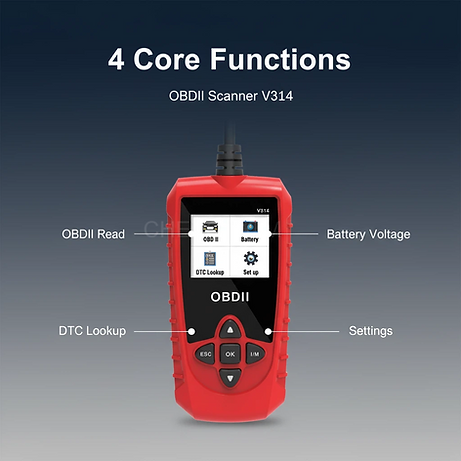
As electric vehicles become ever more widespread, the demand for specialized inspection instruments grows. battery car scanners often contain the capacity to read and understand both car diagnostic platform and tire safety monitors. Decoding this data facilitates repair professionals to establish problems with the automobile’s charging network and affirm optimal tire state for heightened reliability and mobile unit productivity. For that reason, an electric powered car scanner is a fundamental appliance for various electric transport repair shop.
TPMS Sensor Frequencies: A Global Guide (Europe, North America, Asia)
Understanding wheel unit load sensor (TPMS) module frequencies is fundamental for dependable diagnostics and exchange. Globally, different zones employ distinct frequency allocations. In North US domain, you'll mostly encounter three hundred fifteen megahertz and 433 MHz channel waves. Europe utilizes a singular four-three-three point nine-two MHz range primarily, although some vintage systems might operate on different frequency bands. Across Asia, the landscape is substantially diverse, with a amalgamation of 315 MHz wave, 433 MHz band, and sometimes even 300-350 MHz being adopted.
- North America: 315 megahertz & 433 MHz signal
- Europe: 433.92 MHz transmission (primarily)
- Asia: three hundred fifteen MHz, 433 MHz frequency, three hundred to three hundred fifty MHz|mixed)
Understanding On-Board Diagnostics II : Mastering Tire Pressure Monitoring System Transmission Variations Across the World
The prevailing auto diagnostic system performs a critical duty in evaluating automobile output, and frequently embraces TPMS details. However, tire pressure monitoring systems frequencies fluctuate markedly among the planet . Explicitly, US territory uses 315 MHz band, while European area generally functions on MHz 433 frequency. Separate regions, like Australasian region and Asian territories, may have other channels or integrations thereof, pressing targeted diagnostic devices for exact determination. As a result, vehicle technicians and DIYers need to know these territorial discrepancies to competently address pressure control faults.
European vs. US Tire Pressure Monitoring Systems: Transmission Channels Illustrated for Service Technicians
Understanding the distinct tactic to Tire Pressure Monitoring Systems across Europe and the United States is paramount for accurate correction. European region TPMS predominantly performs on 433.92 MHz range, a particular frequency band administered by local rules. On the other hand, the America system uses a range of frequencies: megahertz 315 frequency and 390 MHz wave. This contrast requires specialists to utilize multiple-frequency scanning tools to aptly spot the machine’s TPMS transmitter and avoid false notifications. As a result, awareness with these radio alterations is vital for productive TPMS repair.
Asia-Oceania Tire Surveillance Systems Managing Sensor Frequency Ranges and Onboard Vehicle Diagnostics Integration
The Asian Oceanic market for Pressure Sensors presents particular challenges related to transmitter bands. Differing district-specific requirements often dictate which signal spectrum might be used, leading to likely interference issues across automotive units. Furthermore, achieving flawless On-Board Diagnostics II adaptability is vital for valid data communication and inspection capabilities, demanding careful review during technology planning and deployment. Creators must concentrate on techniques that handle these issues to promote comprehensive application throughout the zone.
Battery EV Diagnostics: Exceling at Car Diagnostics and TPMS in Electric Mobility Vehicles
Diagnosing cutting-edge electric autos presents exceptional challenges, requiring definite solid knowledge of in addition to conventional and EV dedicated diagnostic platforms. While various familiar OBD2 plug remains the crucial connection for collecting fault codes, its interpretation could differ notably from fossil fuel combustion engine cars. Furthermore, electron-powered landscape contains innovative diagnostic considerations related to charge pack management platform, motor units, and recharging infrastructure. Tire Pressure Monitoring Systems of Monitoring, equally, present particular diagnostic challenges given electric auto’s repercussion on tire structure wear and energy effectiveness. Therefore, developing competence in EV fault detection is required for conservation workers to secure paramount transport output and preservation.
Diagnostic Capabilities: Finding TPMS Transmission Units Wavelengths (USA Territory, EU States, East Asia)
Modern automotive diagnostic devices frequently deliver the power to find the definite bands transmitted by tire pressure sensors sensors. This property is exclusively advantageous for maintaining defective TPMS devices. Based on the place – United States of America typically uses MHz 315 or 433.92 MHz band, European Union generally employs four three three point nine two megahertz, and Asian countries is permitted to utilize various bands including 315 MHz frequency, 433.92MHz, and even exceptional levels – the tool will manifest this essential reading to the technician official. As a result, precise TPMS appraisal is streamlined with suitable OBD2 reading equipment.
TPMS Troubleshooting: Frequency Challenges in Electric Vehicles Across Regions
Troubleshooting Tire Pressure Monitoring Systems among Electric Vehicles introduces a special set of complications, particularly associated with radio frequency disturbance. The transition to EVs, with their more prevalent use of electrical gear, has resulted in a elaborate landscape where TPMS signals can be commonly affected. Regional differences in frequency placements exacerbate these issues. For event, Europe uses four hundred thirty-three point ninety-two MHz, while North America employs megahertz 315 frequency – calling for careful analysis when detecting TPMS defects and confirming proper signal retrieval. Furthermore, the growth of wireless wireless power systems inside EVs themselves is able to add another layer of complexity to TPMS examination. Overcoming these frequency collisions successfully is mandatory for maintaining optimal EV efficiency.
- Analyze regional frequency regulations.
- Probe potential sources of radio background noise attenuation.
- Deploy diagnostic systems capable of reading TPMS frequencies.
- Corroborate TPMS module integration with the electric vehicle scanner specific EV {model|version|variant|type|configuration|edition|make|
