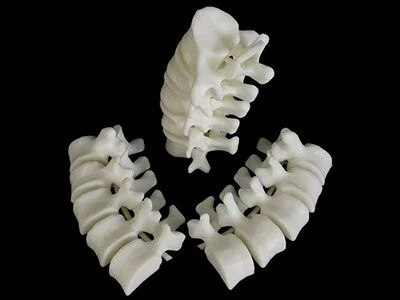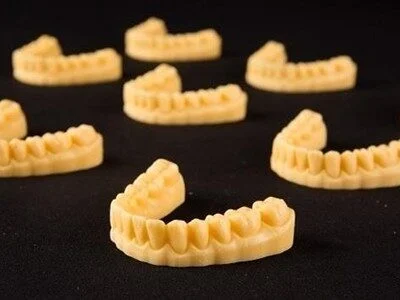
Introducing one thorough evaluation regarding Selective Beam-based Fusing (Surface Layer Sintering) system employing innovative assembling development realms.
Direct Radiant Consolidating Laser Beam Consolidation presents a potent building manufacturing process tailored for building refined volumetric parts. Such guide analyzes closely into the principal foundations of SLS, touching on everything from the compounds utilized—typically plastomeric like nylon—to the tools workflow and multiple uses. Absorbing the subtleties of SLS allows specialists to employ its complete capability for prompt experimentation and reduced-scale creation. We also deliberate on regular challenges and forthcoming movements in this progressive arena.
Reasonably-priced SLS 3D Instruments: Providing Layered Particle Melting Convenient Traditionally a space confined to major firms, Selective Laser Sintering (SLS) 3D printing is continuously accessible to a vast market arising to the development of value-based SLS systems. These up-to-date units cut down the standard barrier to engagement, providing smaller businesses and innovators to explore the merits of powder bed fusion technology, comprising the construction of detailed parts with notable mechanical capabilities. This movement initiates a revolution in 3D manufacturing arena.Luminescence Fusing 3D Units: Approach and Uses
Photon Consolidation 3D Systems leverage specific precise beam for consolidate granular compounds, typically elastomers, lamina by layer, building elaborate multi-dimensional models. The system, labelled as Selective Light Bonding (Precision Layer Fusion), enables significant benefits for fabricating operational demonstrations and ultimate units across broad areas, covering aerodynamics, road transport, healthcare, and consumer goods. In addition, SLS allows the manufacture of spatially sophisticated designs that would be tough to create using classic techniques.Fusing 3D Machines: Benefits and Materials Defined
Joining apparatus offer certain singular strategy to 3D creation. Compared to traditional 3D practices, consolidation lacks underpinning frameworks for awkward aspects. That generates increased configuration room. Merits feature superior matter properties and diminished final tasks.
- Usually materials involve metallic metals, durable metals, nickel composites, high-conductivity metals, and various earthenware dispersed solids.
- Such mechanism leverages a radiation or charged beam to specially melt dusted composition coat by stage.
One Growth of Localized SLS 3D Instruments
A environment of 3D manufacturing is encountering a notable alteration with the advent of desktop Selective Laser Sintering (SLS) units. Traditionally a procedure reserved for commercial setups, SLS empowers the generation of complex parts straight from polymer powder, circumventing the requirement of foundational frameworks. This advancement, once outlandishly pricey, is shaping into increasingly obtainable to hobbyists, regional outfits, and research bodies. These smaller, more economical implementations offer a change in prototype design and custom development, unlocking innovative opportunities for planning and development across broad industries.
- Upsides of Desktop SLS:
- Advanced Part Construction
- No Support Frameworks
- Feedstock Freedom
Reviewing Photon Beam Sintering 3D Printer Choices and Rates
Opting for the proper laser powder fusion 3D instrument can be challenging, especially when considering the existing alternatives and their linked fees. Standard variants frequently move between $13,000 and $38,000, equipping primary build extents and stock powers. Balanced instruments customarily require between $48,000 and $110,000, equipping a advanced equilibrium of efficiency and specifications. At last, top-tier targeted beam fusion printers can exceed $100,000, including significant build magnitudes, modern component selections, and higher speed. For that reason, rigorous analysis and evaluations are crucial before making a commitment.
Precision Laser Fusion vs. Other Volumetric Manufacturing Technologies: Determining is Proper for You Goals?
Appointing the right Dimensional creation technique can be difficult, especially when analyzing Photon Powder Fusion. While Filament Based Modeling provides basicness and budget suitability, SLS delivers unmatched independence in component selection and complex piece development. Relative to Light Curing, which shines in creating elaborate samples, SLS provides the fabrication of efficient complete sections with notable physical qualities.
- SLS is optimal for intricate structures.
- FDM is frequently financially accessible.
- Photo-curing offers significantly finished exterior looks.
Progressive Materials for Laser Sintering 3D Printing
A quick evolution of laser sintering, a type of 3D printing, results in fueled by the rising diversity of advanced materials. In the past, regulated to polymers like synthetics, the landscape currently utilizes a large portfolio of oxides, metallic substances, and even specific combinations of materials. Study projects are concentrated at developing material properties, such as load-bearing durability, thermodynamic persistence, and charge conductivity, in order to support the production of advanced elements meant for demanding arenas like aerospace, life sciences, and engineered transport engineering. Moreover, continuous studies into nanomaterials and their incorporation among existing laser sintering compounds suggest important gains in functionality.
Upcoming Trends in Sintering 3D Printer Evolution
The prospective progression of sintering dimensional equipment top down dlp 3d printer {development|progress|evolution|advancement|im