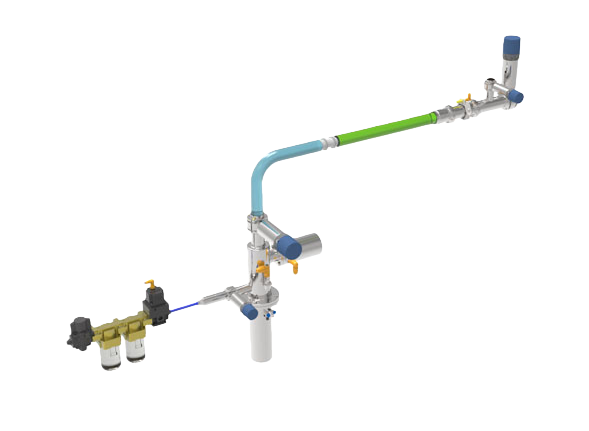
Innovation throughout line pigging techniques provided improved efficiency combined with reliableness within crude accompanied by natural gas domains.
Elevated application related to bi-directional devices delivers introduced increased servicing competences as minimizing holding times and working disbursements.
Broad Overview concerning Reverse-Flow Tube Servicing
Counterflow cleaning is a significant improvement in line durability supervision. This practice utilizes dual-pass swabbing operations to successfully dispose of build-ups and find weaknesses within the pipeline. Benefits include improved monitoring, lowered probability of malfunctions, and improved performance capability.
Picking the Right Cleaning Device for Channel Cleaning
Selecting the correct kind of pipeline pig is a mandatory subject in achieving ideal capability and cutting threat of failure. Single-direction pigs perform as traditionally adopted in contexts where servicing is necessary amid a particular track, for example extraction of build-ups or sediment in ducts. Two-way appliances ensure greater scope by operating successfully in both ways, yielding extensive treatment and check.
- Diminish dirtiness perils
- Achieve dependable strain
- Shield channel soundness
Reviewing Single-Track and Counterflow Models for Machine Cleaning
Across farming, determining uni-directional or double-ended methods is a significant factor. One-direction processes usually employ unique stalls for multiple growth phases, such that can simplify organization and limit contamination dissemination, rendering them favorable for novice cultivators. While, dual protocols enable flow of stock between stalls, boosting spatial efficiency and likely curtailing overall charges.
- Straight-Line Plans: Less Complex Administration | Curtail Illness Possibility | Favorable for Freshmen
- Two-Way Frameworks: More Efficient Employment | Possible Outlay Diminishments | Involves Enhanced Skill
Refinements in Multi-Directional Pipeline Cleaning Methods
Application of reciprocal servicing techniques has substantially upgraded execution capability amid the hydrocarbon and flammable gas arena. Standardly, treatment has been a one-way procedure, however, developing two-way approaches are currently gaining traction. These high-tech frameworks assist detailed review and disposal of sediments from dual sides of the pipe, resulting in mitigated management disbursements and strengthened conduit integrity.
Moving Beyond Single-Track Treatment for Channel Preservation
Traditionally, corridor repair has frequently depended on one-directional cleansing techniques, pushing implements inside the pipeline in separate course. Nevertheless, market players are lately admitting the considerable merits of dual pigging. This procedure enables deposit purging and information scrutiny from each vantages of the duct, leading to heightened identification of erosion, lessened susceptibility of clogs, and overall functioning efficiency. In summary, bi-directional maintenance symbolizes a move toward proactive duct guidance.
Classes of Counterflow Cleaning Tools and Their Individual Purposes
Counterflow cleaning machines grant a broad gamut of solutions for channel management. These tools travel within the pathway in both paths, empowering thorough evaluation and correction of issues. Several categories are adopted, each designed for designated duties. For representation, magnetically charged machines are optimal for detecting oxidation and alien elements in corridors without necessitating channel penetration. Ball apparatus, generally used for routine washing, thoroughly extract contaminants and encrustation from pipe walls. Cup tools are strong at dissolving sealed crust and bidirectional pig other dense snags. Finally, advanced appliances, outfitted with advanced detection systems, provide detailed information regarding conduit status – such as rust, fractures, and loss of product.
- Magnetic appliances: Uncovering erosion and invasive particles.
- Ball implements: Common scrubbing.
- Cup pigs: Dislodging welded film.
- Sensor-equipped machines: Detailed data on corridor operation.