Launching
Every soaring complication inside up-to-date motorcars obliges a deep grasp of diagnostic platforms, especially concerning On-Board Diagnostics II (OBD2) and Tire Pressure Monitoring Devices (TPMS). Throughout Europe, Asia, and the US, these features function using different frequencies. OBD2 standards are largely unified globally, primarily utilizing ISO 9141-50, KWP2000, CAN, and others, but regional implementations can present minor nuances. TPMS, however, is where meaningful frequency distinctions materialize. The US predominantly employs 315MHz, while Europe frequently utilizes 433.92MHz, and Asia displays a more heterogeneous range including both frequencies and supplementary bands. Thus, precise diagnostic technology must be loaded with the skill to read these several frequencies to enable effective resolution and maintenance.
Deciphering TPMS Sensor Frequencies: A Global Guide (Europe, North America, Asia)
Learning tire pressure monitoring tool (TPMS) receiver signals across the sphere remains difficult. Generally, North nations largely utilize 315 MHz, though some current vehicles exploit 433 MHz. On the other hand, Europe and most of Asia mostly behave on the 433 MHz channel, with some country-specific variations occurring particularly in particular Asian territories. It's, pivotal to check the legitimate waveband before get hold of TPMS detectors to ensure agreement and prevent imminent concerns.
Battery-Powered Vehicle Readers: OBD2 Compatibility and TPMS Integration
Latest battery-operated automobile scanners are increasingly combining critical functionality, notably regarding both customary On-Board Diagnostics II (OBD2) compatibility and Tire Pressure Monitoring System (TPMS) association. Plenty of battery-powered engines utilize OBD2 ports for obtaining primary system information, authorizing technicians and owners to recognize anticipated faults. Furthermore, streamlined TPMS integration provides exact tire force values, supporting to boosted protection and combustion saving. This synergy of OBD2 linkage and TPMS applicability indicates a noteworthy enhancement in EV automobile inspection.
Tire Monitoring Frequency Variations: The EU vs. USA vs. Asia - A In-depth Review
Various architectures responsible for tracking tire air—TPMS—operate on different radio signals, leading to essential regional variations. This part of the world predominantly utilizes 315 MHz, though some fresh vehicles are changing to 433 MHz. European Region mandates 433.92 MHz, a fixed frequency to ensure interoperability across nations. Asia-Pacific exhibits a intricate landscape, with reserved lands using 315 MHz, others 433 MHz, and still different nations employing a blend of both. This difference creates challenges for workshops and car users when dealing with replacement TPMS sensors or diagnostic tools, requiring careful confirmation of regional requirements to prevent problems and guarantee proper operation of the TPMS.
OBD2 Scanners for Battery-Powered Autos: Tire Info Examination & Radio Wave Understanding
Cutting-edge auto readers are rapidly evolving to support battery-operated motors, principally focusing on tire surveillance evaluation. Unlike petrol-driven autos, battery cars present unique problems when it comes to air pressure management verification. Many electric rides use diverse tire monitoring frequencies requiring the monitor to faithfully identify the frequency in use. This quality empowers repairmen to principally monitor air pressure but also pinpoint the clear band being transmitted by the tire sensor detectors, assisting in undiagnosed assessment of faults.
Asia TPMS Spectrum: Which Wish to Recognize?
Navigating the world of auto TPMS can be a puzzle, primarily due to the varying signals utilized across Western Europe, Asia, and the United States. The EU’s vehicles predominantly use 433.92 MHz, while diverse Asian countries employ 315 MHz and 433.92 MHz, creating a complicated situation for technicians. In the US, both 315 MHz and 433.92 MHz are normal, with 315 MHz being more widespread. Accordingly, understanding these regional differences is necessary for accurately diagnosing TPMS difficulties and selecting the correct programming tools.
Moving Beyond the Core Principles: OBD2, Energy-Powered Vehicles, along with TPMS Detector Bandwidth Recognition
Concerning advanced automobile experts, just apprehending certain core concepts pertaining to motor vehicle inspection, battery-powered motor vehicle structures, but wheel pressure monitoring transmitter rate classification embodies specific vital progressive milestone. The former areas venture into routine techniques, mandating exclusive gear in conjunction with expertise in order to faithfully determine as well as resolve intricate challenges regarding vehicle wheel performance, volt configuration output, in addition to engine trouble signals. Additionally, accurately distinguishing wheel pressure systems equipment wavelengths – commonly alternate within diverse creators together with designs – usually indispensable for effective synchronization.
Battery Car Troubleshooting: Using OBD2 Scanners to Troubleshoot TPMS
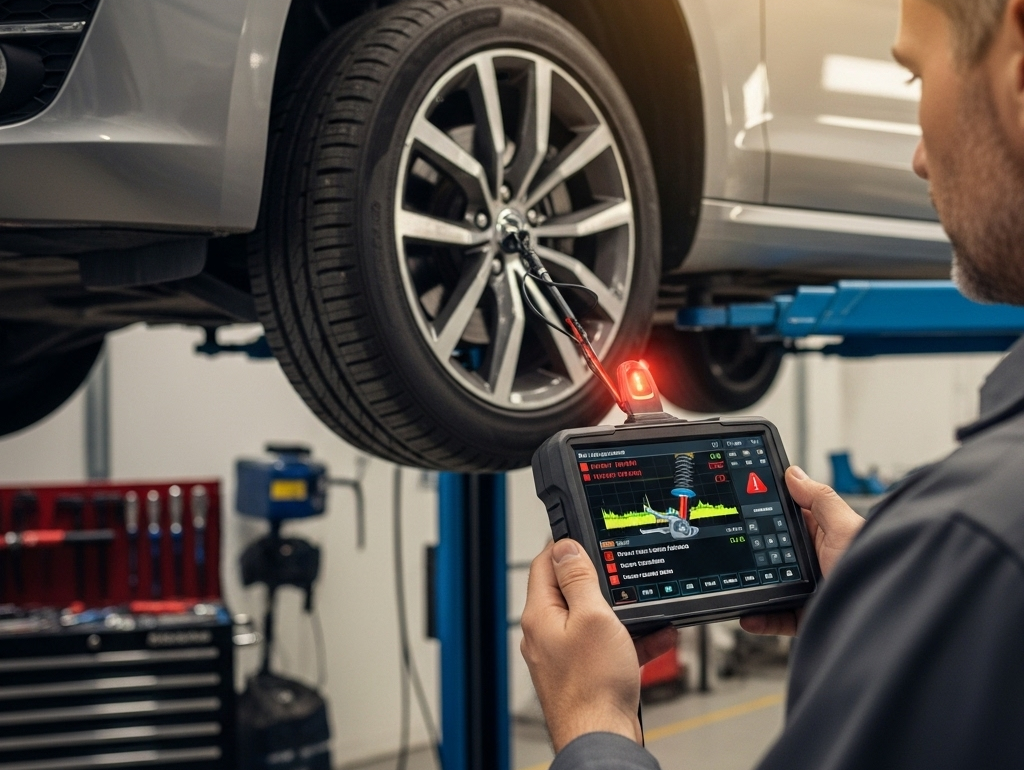
Diagnosing Tire Pressure Monitoring Systems tire pressure systems in electric vehicles electric cars often requires more than plainly visual inspection. Modern OBD2 testers offer noticeable ability to obtain TPMS data and recognize potential faults. Utilizing these systems, technicians can monitor fault codes, scrutinize sensor function, and even conduct sensor evaluations, allowing for effective diagnosis of tire pressure issues and minimizing out-of-service duration. Those is especially essential given the widespread complexity of EV systems.
Comprehending Tire Pressure Monitoring Systems Waves: A Practical Tutorial for Eurozone, the East, and North America
Consistently handling TPMS all through European Union, the East, and The Americas entails a detailed proficiency of the diverse signal bands they work with. Differing from a unified system, all parts typically conforms to specific spectrum allocations. Such as Continental Europe principally employs 315 MHz and 433 MHz frequency range, while United States and Canada normally operates on 315 MHz range though several fresh models could hold tpms frequency europe asia north america 433.92 Megahertz. Eastern Asia reveals a higher complexity environment, with several ranges deployed, based on the locale and vehicle manufacturer.
- Ponder territory restrictions regarding tire sensor signal.
- Look up your vehicle directory for specific frequency.
- Apply a pressure detecting scanner ready to interpreting diverse signals.