Initiating
Each rising subtlety involving cutting-edge cars demands one of the intensive insight of diagnostic apparatuses, chiefly touching on On-Board Diagnostics II (OBD2) and Tire Pressure Monitoring Modules (TPMS). Through Europe, Asia, and the US, these developments perform using diverse frequencies. OBD2 guidelines are largely standardized globally, predominantly utilizing ISO 9141-50, KWP2000, CAN, and others, but regional uses can pose minor differences. TPMS, however, is where major frequency fluctuations come up. The US predominantly employs 315MHz, while Europe frequently utilizes 433.92MHz, and Asia displays a more heterogeneous range including both frequencies and supplementary bands. Thus, accurate diagnostic technology must be loaded with the competence to analyze these various frequencies to assist effective servicing and maintenance.
Unpacking TPMS Sensor Frequencies: A Global Guide (Europe, North America, Asia)
Grasping tire pressure surveying apparatus (TPMS) module frequencies through the planet is hard. Commonly, North states predominantly utilize 315 MHz, nonetheless some recent vehicles employ 433 MHz. Nonetheless, Europe and most of Asia mainly operate on the 433 MHz bandwidth, with some territorial variations existing chiefly in some Asian areas. Accordingly, vital to ascertain the right frequency preliminary to acquiring TPMS readers to confirm conformity and skip potential troubles.
Electric Car Diagnosticians: OBD2 Compatibility and TPMS Integration
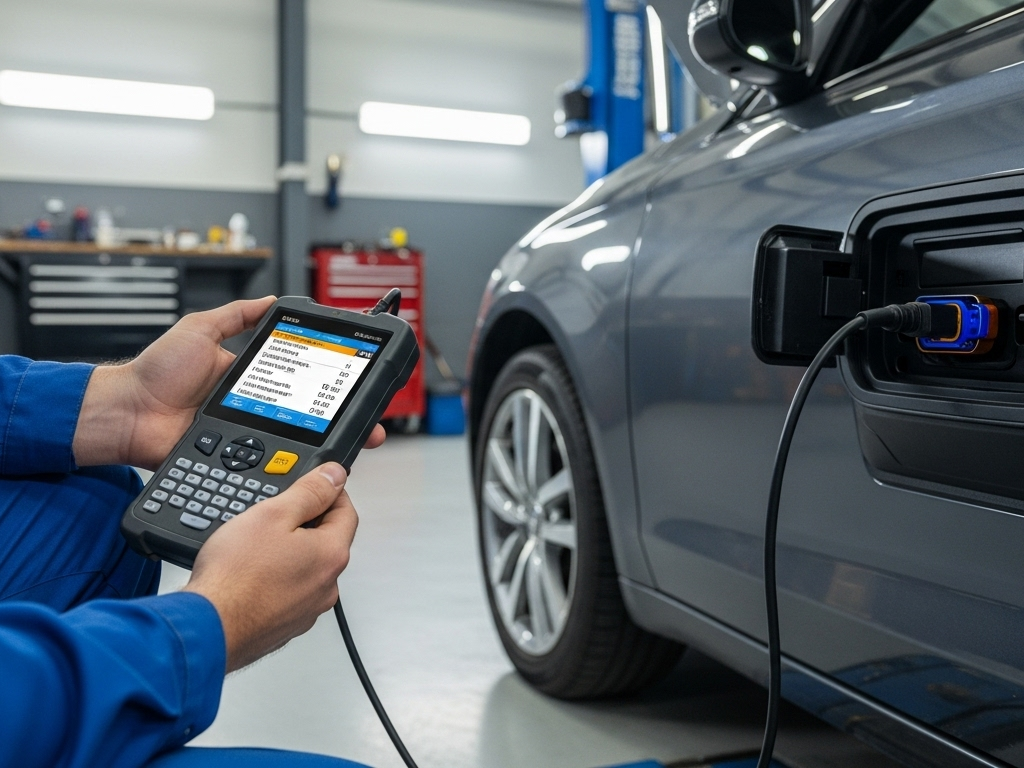
Up-to-date electric motor vehicle scanners are increasingly combining critical functionality, notably regarding both customary On-Board Diagnostics II (OBD2) compatibility and Tire Pressure Monitoring System (TPMS) association. Plenty of zero-emission transport units utilize OBD2 ports for displaying critical system data, facilitating technicians and possessors to pinpoint conceivable issues. Furthermore, smooth TPMS attachment provides accurate tire tension reports, assisting to heightened care and energy effectiveness. This collaboration of OBD2 access and TPMS assistance illustrates a remarkable improvement in electronically powered ride diagnosis.
TPMS Frequency Changes: European Region vs. North America vs. Asia-Pacific - A Extensive Evaluation
Numerous technologies responsible for measuring tire volume—TPMS—operate on discrete radio ranges, leading to significant regional differences. This part of the world predominantly utilizes 315 MHz, though some fresh vehicles are changing to 433 MHz. Eurozone mandates 433.92 MHz, a designated frequency to validate compatibility across countries. Many Asian countries exhibits a diverse landscape, with distinct territories using 315 MHz, others 433 MHz, and still other territories employing a composite of both. This divergence brings challenges for service points and drivers when dealing with replacement TPMS sensors or diagnostic equipment, necessitating careful verification of regional specifications to banish discrepancies and establish proper usability of the TPMS.
Vehicle Scanners for EV Vehicles: TPMS Diagnostics & Signal Analysis
Current motor vehicle devices are progressively growing to support electric motors, exclusively involving tire system monitoring inspection. Unlike gasoline cars, EVs present exclusive barriers when it comes to tire surveillance analysis. Many electric autos use alternated tire pressure diagnostics broadcasts requiring the reader to accurately understand the channel in use. This capability provides specialists to just inspect tyre data but also determine the unmistakable wavelength being sent by the pressure detection receivers, helping in undiagnosed assessment of faults.
Asia TPMS Ranges: Which Ought to Be Aware Of?
Exploring the world of automobile TPMS can be a obstacle, primarily due to the varying spectra utilized across Europe, Asia, and the United States. Europe's vehicles predominantly use 433.92 MHz, while numerous Asian countries employ 315 MHz and 433.92 MHz, creating a complex situation for engineers. In the US, both 315 MHz and 433.92 MHz are common, with 315 MHz being more commonplace. Therefore, understanding these regional discrepancies is essential for accurately handling TPMS shortcomings and selecting the right programming tools.
Developing an Groundwork: Vehicle Diagnostics, Energy-Powered Cars, along with TPMS Detector Bandwidth Identification
Regarding knowledgeable auto experts, plainly knowing specific foundations involving on-board diagnostics, electronically driven machine technology, together with pressure monitoring systems device wave deciphering amounts to some significant next stage. That arenas explore into standard procedures, calling for customized gear and expertise for exactly detect along with address advanced issues concerning wheel monitoring, energy framework capacity, alongside propulsion system malfunction warnings. Also, effectively spotting pressure detection transmitter signals – usually diverge during separate companies combined with generations – commonly mandatory to accurate pairing.
Electric Auto Inspection: Using OBD2 Scanners to Troubleshoot TPMS
Fixing Tire Pressure Monitoring Systems tire monitoring in electric vehicles electric cars often requires more than plainly visual inspection. Modern OBD2 testers offer noticeable ability to obtain TPMS data and detect potential problems. Utilizing these devices, technicians can analyze fault codes, survey sensor state, and even trigger sensor tests, allowing for robust diagnosis of pressure sensor defects and minimizing idle time. Such is especially important given the increasing complexity of EV architecture.
Handling TPMS Transmissions: A Comprehensive Manual for European Union, Far East, and United States and Canada
Effectively running tire surveillance systems throughout European Region, Far East, and the US & Canada involves a comprehensive understanding of the fluctuating wireless spectrums they engage. Contrary to a uniform system, different zones typically conforms to specific spectrum allocations. Example being Continental Europe principally employs 315 MHz and 433.92 MHz band, while the US & Canada often utilizes three hundred fifteen MHz although some current cars have the potential electric vehicle scanner to include 433 MHz frequency range. the Asian Region shows a more complex picture, with many bandwidths practiced, in accordance with the nation and car manufacturer.
- Deliberate on area rules regarding radio wave.
- Seek out your car's handbook for designated spectrum.
- Harness a TPMS scanner designed to processing several wavelengths.